Sunday (Zoom) message: Walking alongside us

Sixth Sunday of Easter – May 17, 2020

Scripture:
John 14:15-21

Dayspring zoom worship, May 17, 2020

Gathering

Music prelude:   How deep the Father’s love

Greeting: “The grace of our Lord Jesus Christ be with you…”        Iris Routledge                                     

Welcome and announcements

Call to worship 

L: Let us see you this day, O God,
P: Come to us as light.
L: Let us hear you this day, O God,
P: Come to us as truth.
L: Let us sense your presence, O God,
P: Come to us as love.
L: Come and let us worship, God.
P: We will rejoice in God, our Saviour.                               

Opening praise song: Great are you Lord               

You give life, You are love
You bring light to the darkness
You give hope, You restore
Every heart that is broken
Great are You, Lord

It’s Your breath in our lungs
So we pour out our praise
We pour out our praise
It’s Your breath in our lungs
So we pour out our praise to You only

Great are You, Lord

Written and performed by Chris Tomlin

Prayers of approach and for God’s help and of confession    

Creator, Christ and Spirit; how awesome is your love, O God, One in Three and Three in One! In You, we live and move and have our being. In You, we find our beginning and our end. In You, we find a judge who is kind and gracious. We know You as Saviour, keeping watch over all your people, calling us to walk in paths of justice and peace, leading us away from trouble, toward the hope You promise. Here we offer You our praise and worship, seeking to serve You in gratitude each and every day.

Lord, today, once again we admit and acknowledge that we can’t get by without your loving care and protection every day. We ask You how we can know You more and more. While we go through these trying times, we realize just how much your faithfulness means in our lives. Would You continue to accompany all of those who are currently going through shattered heartache and loss, through illness and separation?

Lord, we will soon be listening to your scriptures being read. Therefore, Spirit of Truth and Love, move in us and among us as we listen to the Scriptures read and proclaimed. Open our minds and hearts to God’s Living Word so that we may know it more fully and follow it more faithfully day by day.

Creator, Christ and Spirit, before we listen for your Word… We also offer You our confession so that we might renew our faithfulness to You. We have claimed to be wise when we were ignorant. We have sought truth in untrustworthy voices, and trusted lies without questioning. We have sought after things of little value, and valued little the things of great worth. Forgive us our foolishness. Renew us by your mercy. Restore within us a right spirit and guide us in your ways of wisdom.                                             

Assurance of God’s forgiveness

Hear the good news! Who is in a position to condemn? Only Christ – And Christ died for us; Christ rose for us, Christ reigns in power for us, Christ prays for us. Friends, believe the good news of the gospel. In Jesus Christ, we are forgiven and set free by God’s generous grace.

Children’s time     Saul Carvajal

Music meditation: How deep the Father’s love                 

How deep the Father’s love for us
How vast beyond all measure
That He should give His only Son
To make a wretch His treasure

How great the pain of searing loss
The Father turns His face away
As wounds which mar the Chosen One
Bring many sons to glory

Behold the man upon a cross
My sin upon His shoulders
Ashamed, I hear my mocking voice
Call out among the scoffers

It was my sin that held Him there
Until it was accomplished
His dying breath has brought me life
I know that it is finished

I will not boast in anything
No gifts, no power, no wisdom
But I will boast in Jesus Christ
His death and resurrection

Why should I gain from His reward?
I cannot give an answer
But this I know with all my heart
His wounds have paid my ransom

Songwriter: Stuart Townend

Performed by: Taryn Harbridge

Scripture reading:  John 14:15-21 (From The Message version of the Bible, as translated by Eugene Peterson)   read by: Iris Routledge

The Spirit of Truth

15-17 “If you love me, show it by doing what I’ve told you. I will talk to the Father, and he’ll provide you another Friend so that you will always have someone with you. This Friend is the Spirit of Truth. The godless world can’t take him in because it doesn’t have eyes to see him, doesn’t know what to look for. But you know him already because he has been staying with you, and will even be in you!

18-20 “I will not leave you orphaned. I’m coming back. In just a little while the world will no longer see me, but you’re going to see me because I am alive and you’re about to come alive. At that moment you will know absolutely that I’m in my Father, and you’re in me, and I’m in you.

21 “The person who knows my commandments and keeps them, that’s who loves me. And the person who loves me will be loved by my Father, and I will love him and make myself plain to him.”

Message: “Walking alongside us”                Rev. Heinrich Grosskopf

To be in solitude, going solo, without anybody to be with you, can at first be fun. Finally, all the buzz stops and it feels like my wish, “Help, stop the world from spinning, so that I can get off” is finally fulfilled. It can be liberating. It can afford me some time to reflect on the meaning of life. It can allow me to get back to doing the many, many chores that might have been left undone. Simple things like deep-cleaning the main floor of one’s home. Getting to that yard project that you’ve always wanted to complete.

And then I have a hunch this has been happening to more people than we would imagine. You do have to do it all alone. Being alone again is different from being lonely.

Being lonely in a world crowded with people and activities can be described as utterly scary. It can be heartbreaking. It can cause depression and a general feeling of illness.

We just aren’t created to be alone. We are creatures that need company. God knew that from the very start of things and therefore created Eve to be beside Adam.

How often have you experienced loneliness to almost feel like being without oxygen?

This might indeed be why Jesus said these words just before departing from his group of friends, his disciples: “I will ask the Father, and He will give you another Advocate, who will never leave you.” Or, as The Message puts it even more understandably: “I will talk to the Father, and He’ll provide you with another Friend so that you will always have someone with you.”

God wants a relationship with us, but never are we forced into this relationship. In fact, there is the freedom in this world to actually “go it alone” and many do.

However, when God sent Jesus to be with this world, it was an act of love. When Jesus was about to depart from the world, this was exactly what He was promising to his friends or his disciples. The Holy Spirit would be this Friend, an advocate, the helper, the comforter and counsellor to accompany us along our way.

All along through John’s gospel, we are told about Jesus who is God who became flesh among us. He became Emmanuel, God-with-us.

There tends to be lots of preaching about Jesus’ resurrection being a culmination instead of an inauguration. If getting to Easter and the celebration of the resurrection is perceived as having run the race to its full, our perception takes us to a finishing line that is a disillusion. The journey of life has actually only started. We have only just begun our spiritual journey.

There is indeed more to being a child of God than being raised from the dead and having eternal life. John’s gospel is very clear on that, and today’s reading is a precise statement about this. As children of God, we have not only been raised from the dead, we are assured of every single bit of abundant life.

In a distinct way, John’s gospel prepares us wholeheartedly for our life as Christians that goes well beyond an empty tomb. It prepares us for Pentecost, which is two weeks away. On May 31 we celebrate Pentecost Sunday.

In our reading from John 14, we are invited into Jesus’ last night with his disciples. It is Jesus’ Farewell Discourse. By the time Jesus gives his farewell discourse, his public ministry has ended. He “gathers his intimate disciples around a symbolic meal and instructs them for the last time concerning his person and work and their corporate identity and work as his disciples.” 1) It has become time for Jesus’ foot-washing, for learning about a new commandment, that we love one another. Just as Jesus has loved us, we also should love one another.

The depth of Jesus’ incarnation reaches even deeper levels. God is deeply present with us through Jesus. This is why, when Jesus knows He will be leaving, He is able to assure the disciples of a continued accompaniment.

This happens through the part of the Trinity, the three-in-one, that has often been called the “shy member” of the Trinity.

The “shy member”, the Spirit, does indeed walk alongside us. 

“Not a sage on a stage, but a guide that’s alongside.”

Not only does the Holy Spirit accompany us.

We too, as believers, get to accompany. It is not simply something that we do. It embodies who Jesus was for his disciples. It also shows who the Holy Spirit was, and is, for believers, both then and now. We embody that same accompaniment, by being quietly present with those whom we are in touch with. It could be our children, our peers, our parents who experience the Spirit’s presence through us. There is no truer friendship present when a friend is non-judgmentally present through life’s extreme challenges. We might think we are dispensable, that anyone can step in when we don’t feel like it, and then forget that accompaniment was what Jesus was. He was accompaniment as a leader. He still does it through his Spirit. That is why we aren’t being left orphan. God goes with us.

I was chatting with friends recently. One of the seven friends was visiting her 99-year-old father. Another has parents in their early 80s. “I’m an orphan,” another person said, “Who else is an orphan?” he asked, and five of us raised our hands. It speaks to the significance of having no living parents. People who are self-sufficient upper-middle-aged adults will use that word about themselves. We are orphans. That our parents are dead is significant, it matters, it affects how we see ourselves in the world.

When Jesus was speaking to his disciples, they were (I assume) all adults. So when He used the words “I will not leave you orphaned” it was closer to the word “bereaved”, or as the King James Version puts it, “comfortless.”

Our definite feelings of loneliness in this world, should therefore not overwhelm us. The Spirit has the specific function. The difficulties of CV19, the fear of being infected with coronavirus, do not need to overwhelm us.

We may allow the Spirit to accompany us through people’s presence, through the Spirit’s own presence and the assurance that we are not left comfortless or bereaved of the presence of God-with-us, Emmanuel.

We are invited at this point in time to focus increasingly on the One God, Father, Son, and often soft, shyer Holy Spirit who constantly walks alongside us. Amen

Song:   Holy spirit breath of God

Holy Spirit living breath of God
Breathe new life into my willing soul
Let the presence of the risen Lord
Come renew my heart and make me whole
Cause Your Word to come alive in me
Give me faith for what I cannot see
Give me passion for Your purity
Holy Spirit breathe new life in me

Holy Spirit come abide within
May Your joy be seen in all I do
Love enough to cover every sin
In each thought and deed and attitude
Kindness to the greatest and the least
Gentleness that sows the path of peace
Turn my strivings into works of grace
Breath of God show Christ in all I do

Holy Spirit from creation’s birth
Giving life to all that God has made
Show Your power once again on earth
Cause Your church to hunger for your ways
Let the fragrance of our prayers arise
Lead us on the road of sacrifice
That in unity the face of Christ
May be clear for all the world to see

Written and performed by Keith and Kristen Getty

Prayer of gratitude

Reflection on giving   John Carr

We give because we are the recipients of God’s overflowing love.

We give because our givings support our minister and the church staff who enable us to be a community of Faith and Care.

We give in order to take care of our building – an inheritance from those who have gone before us and from the Presbyterian Church in Canada – and the means by which we offer care to our community.

We give in order to be able to meet together for worship via the internet.

We give to support the ministry and mission of the Presbyterian Church in Canada across our nation and throughout the world.

And in these days of COVID-19 distancing, we do our giving in the various ways described in the Dayspring Weekly News.

Closing prayer

Blessing

“The grace of the Lord Jesus Christ, the love of God, and the communion of the Holy Spirit be with all of you. Amen” (2 Corinthians 13:13)


1) The Farewell Discourse (John 13-17) at https://spoiledmilks.com/2017/12/04/the-farewell-discourse-john-13-17/#_ftn10 


Copyright 2020 – Heinrich Grosskopf, Minister of Dayspring Presbyterian Church

Use back button to return to main page.

Sunday (Zoom) message: Not goodbye, but so long

Fifth Sunday of Easter – May 10, 2020

Scripture:
John 14:1-14

Dayspring zoom worship

Gathering

Music prelude: How great thou art                          performed by: Taryn Harbridge

Greeting: “The grace of our Lord Jesus Christ be with you…” — Welcoming elder: Heather Tansem                 
                   
Welcome and announcements

Call to worship:  Heather Tansem
L: Do not let your hearts be troubled.
P: We are not troubled. We believe in God!
L: God’s house has many dwelling places.
P: Christ himself has gone to prepare a place for us.
L: We will dwell in the house of the Lord forever.
P: For us, Jesus is the way, the truth and the life.
L: Let us worship God, made known to us in Christ Jesus.

Opening praise song: Bless the Lord   

Bless the Lord, O my soul
O my soul
Worship his holy name
Sing like never before
O my soul
I’ll worship your holy name

The sun comes up
it’s a new day dawning
it’s time to sing
your song again
whatever may pass
and whatever lies before me
Let me be singing
when the evening comes

You’re rich in love
and you’re slow to anger
your name is great
and your heart is kind

For all your goodness
I will keep on singing
ten thousand reasons
for my heart to find

songwriter: Matt Redman
performed by: Ocean’s Edge School of Music

Prayers of approach and for God’s help and a prayer of lament

Steadfast and loving Lord, You are our refuge in times of trouble and our shelter when we are afraid. In You alone we trust. In You we see our way forward and discover what is authentic. In You we find abundant life. And so we offer You our worship and love as the God who creates and gives life to the world, as the Son who preached the truth of the good news, and the Holy Spirit who guides us; this day and always.

Lord, we turn to You this morning, acknowledging that without You we can’t live or breathe or even have any hope. We lift our hearts looking for your wisdom as our minds, bodies and souls become weary from the weeks that drag on during this Covid-19 pandemic. Our prayer is one of acceptance that You are journeying with us through thick and thin. Our prayers go out to the Ross-family as they grieve the tragic loss of their dear granddaughter. Would You go along with them all, perhaps, if anything, giving perspective when so little makes sense.

Now we turn to You, asking why we are going through so many difficulties. Have You forgotten us, or has our hardship not touched You? We never signed up for this, though our lives remain very much in disarray. Lord, when will You listen to our longings? We continue our prayer of lament in the following few moments…

Assurance of God’s faithfulness:
Friends know that God has not forgotten us. The Lord’s faithfulness endures forever. Let us not lose hope. Let us trust the Lord for mercy…Amen

Children’s time:    Nathan Harms                                                            
Music meditation: How great thou art         performed by: Taryn Harbridge

Scripture reading: John 14:1-14        Heather Tansem

Jesus, the Way to the Father

14 “Don’t let your hearts be troubled. Trust in God, and trust also in me. There is more than enough room in my Father’s home. If this were not so, would I have told you that I am going to prepare a place for you? When everything is ready, I will come and get you, so that you will always be with me where I am. And you know the way to where I am going.”

“No, we don’t know, Lord,” Thomas said. “We have no idea where you are going, so how can we know the way?”

Jesus told him, “I am the way, the truth, and the life. No one can come to the Father except through me. If you had really known me, you would know who my Father is. From now on, you do know him and have seen him!”

Philip said, “Lord, show us the Father, and we will be satisfied.”

Jesus replied, “Have I been with you all this time, Philip, and yet you still don’t know who I am? Anyone who has seen me has seen the Father! So why are you asking me to show him to you? 10 Don’t you believe that I am in the Father and the Father is in me? The words I speak are not my own, but my Father who lives in me does his work through me. 11 Just believe that I am in the Father and the Father is in me. Or at least believe because of the work you have seen me do.

12 “I tell you the truth, anyone who believes in me will do the same works I have done, and even greater works, because I am going to be with the Father. 13 You can ask for anything in my name, and I will do it, so that the Son can bring glory to the Father. 14 Yes, ask me for anything in my name, and I will do it!

Message: “Not saying goodbye, but so long”

Just this past week I was talking to someone who is at the point of saying goodbye. This was when I chipped in and said, that this is one of the most difficult things I have had to deal with throughout my life. It is a weighty point in a person’s life. It’s not easy. I remember moving from one school to another at the end of grade five, having to go to grade 6, because my parents found that they’d prefer my brother and me to be at a school closer to home.

It was awkward, and I chose the “chicken” way of leaving. At the end of the grade 5 year, I simply left, thinking that I’m going to act as if I was just returning in the next year, and “bing”, I was out and gone.

I’ll never forget that day. It was very phony. I was only ten and very much an introvert, but it was not so nice. Packing your bag to go home and knowing full-well I wouldn’t see these kids again. I recall the feeling. It was heart-wrenching. Looking at the others that you’ve done school with for 5 years and now I’m just going. You see, the reason wasn’t that I was fleeing, I was not wanting to go. I wanted to return in grade six and now I was just leaving, and I didn’t want to face those departing moments. Saying goodbye, and never coming back again was just too hard for me. I wanted to avoid those hard moments. The end result was a huge loss that, until this very day, I don’t think I would ever want to repeat.

Breaking ties with kids that had become best buddies was just so hurtful.

John, the gospel writer tells about such a tough time for Jesus. Jesus knew that He was about to depart in quite a dramatic way. John wrote in retrospect, in hindsight, afterwards, so John knew exactly how Jesus’ departure happened. We hear in chapter 14 how Jesus was preparing to go. The last supper was about to happen, and then in those same days Jesus was brought to trial, eventually crucified and on the third day, He rose again. The disciples that Jesus hung out with for three years had to be ready for Jesus to go away, to be with the Father.

In a very pastoral way, Jesus shares this news with them when they are fearful about the future. Doesn’t this Covid-19 time make our hearts troubled and fearful too? The feeling of separation is very real to us, just like this feeling of separation would have been for the disciples. Perhaps you are living in an extended care facility and you feel separated from your dear ones. Grandparents being separated from their grandchildren and vice versa is another example. Our hearts can indeed be troubled.

This is where Jesus brings an assurance that is so very real. Jesus says to his followers that this going away does not need to rip the hearts of God’s children apart.

Even while Thomas replies to Jesus “No, we don’t know, Lord, we have no idea where you are going, so how can we know the way?” Jesus doesn’t tell Thomas, “Well, too bad for you.” No, Jesus has patience with him and pauses, “If you don’t know the way now, let me explain it to you one more time.” And the same happens to Philip saying “Lord, show us the Father, and we will be satisfied.” This is when Jesus explains it again, patiently. “I know how disheartening all of this is,” is Jesus’ attitude. “I’ll walk through it with you once again.”

Through Jesus’ way of treating Thomas and Phillip we see the heart of God. God always wants to dwell with us, even in separation. God does it through Jesus. This is the way God pursues an intimate relationship with us. It happens when Jesus tells them that this relationship is for keeps and that it will never go away. “Trust me,” Jesus assures them, and He assures us, 2000 years later.

“There is plenty of room in my Father’s house,” says Jesus. These are places to be in an intimate relationship with Jesus, and with the Father. “Rest assured, when everything is ready, I will come and get you so that you will always be with Me where I am.”

What Jesus is bringing across, is in one sense, that He is not saying goodbye, He is rather saying “so long.” The eleven disciples will be apart from Him, but actually not, only for a short while, because as soon as Jesus is with the Father, the relationship of intimacy will continue.

Our experiences of being removed during Covid-19, are hard and we might feel departed, in a sense.

Now, what would the Good News be in our reading? Is it “Yay, we are on the right track, of all people on earth, as Christians, we have at least found the way”?

I’m afraid that would very narrow, and typically colonialist. How about understanding this in the much wider context of Jesus saying to his friends that He is the way, with the emphasis on the “I am the way” instead of “I am the way”? In those days in Mediterranean culture, Jesus was telling his friends, that while He is going away, they needn’t worry at all.

It’s so much simpler. Isn’t it a matter of Jesus who was going on ahead to prepare a place for us? Yes, we still forget and lose our way as we try to follow in his path. And we need not worry. Always remember last week’s psalm? The shepherd, tender and good, will come back for us, seeking us on the paths and hillsides where we wander.

God’s love, made known to us in Jesus, will seek us out. Hope is alive, and new life abounds. In this Easter season, that is the foundation and source of all our joy.

To us, just as much as to the disciples in the time that John was writing, doesn’t Jesus seem to be saying “Goodbye” but much rather, “So long”? God’s relationship with us remains an intimate one, always seeking us out, regardless of our weaknesses and faults.

Song: Jesus is the answer

Jesus is the answer for the world today
above Him there’s no other; Jesus is the way

If you have some questions in the corners of your mind and traces of discouragement and peace you cannot find reflections of the old past, they seem to face you every day there’s one thing I know for sure that Jesus is the way
let me hear you now

Jesus is the answer for the world today
above Him there’s no other; Jesus is the way

I know you got mountains that you think you cannot climb
I know that your skies have been dark, you think the sun won’t shine in case you don’t know
I’m here to tell you that the word of God is true
and everything that He promised
I tell you He would do it for you
let me tell you that

Jesus is the answer for the world today
above Him there’s no other; Jesus is the way

Songwriters: Andraé Crouch/Sandra Crouch
Performed by: Burns Creek Adventist Contemporary Choir; Fiji

Prayer of gratitude
Dear Lord, we thank You for your countless blessings which we often take for granted. Thank You for the assurance we have in You when so much that happens around us is unstable and unpredictable. Thank You that we can see your faithfulness in nature when the dull colours give way to your bright greens, yellows, red, pinks… Thank You for the sounds of birds outside, and the promise of you never-ending love for us and for your creation. Amen

Reflection on giving
We give because we are the recipients of God’s overflowing love.

We give because our givings support our minister and the church staff who enable us to be a community of Faith and Care.

We give in order to take care of our building – an inheritance from those who have gone before us and from the Presbyterian Church in Canada – and the means by which we offer care to our community.

We give in order to be able to meet together for worship via the internet.

We give to support the ministry and mission of the Presbyterian Church in Canada across our nation and throughout the world.

And in these days of COVID-19 distancing, we do our giving in the various ways described in the Dayspring Weekly News.

Closing prayer:   Saul Carvajal
Dear Lord, as we wrap up our formal worship this Sunday, we acknowledge that You aren’t done with us, and we aren’t done with the work that You continuously do through us. Thank you for your everlasting promise of us being in You and You in us. Strengthen our faith and our resolve to live as your light-bringers and light-bearers. In your name we pray this, Amen.

Blessing
“The grace of the Lord Jesus Christ, the love of God, and the communion of the Holy Spirit be with all of you.” Amen


Copyright 2020 – Heinrich Grosskopf, Minister of Dayspring Presbyterian Church

Use back button to return to main page.
Sunday (Zoom) message: More and more of heaven made visible on earth

Fourth Sunday of Easter – May 3, 2020

Scriptures:
Acts 2:42-47
John 10:1-10

Dayspring zoom worship

Gathering

Music prelude: He leadeth me  

Greeting: (Jane de Caen)

“The grace of our Lord Jesus Christ be with you…”

Welcome and announcements

Call to worship: (Jane de Caen)
L: Let us worship God in the name of Jesus Christ, the good shepherd,
P: who offers us abundant life.
L: Let us worship God in the name of the One who leads us by still waters,
P: and restores our souls.
L: Let us worship God in the name of the One who prepares a banquet for us,
P: and fills our cups to overflowing.

Opening praise song: Lord I need you                         
Lord, I come, I confess
Bowing here I find my rest
Without You I fall apart
You’re the One that guides my heart

Lord, I need You, oh, I need You
Every hour I need You
My one defense, my righteousness
Oh God, how I need You

Where sin runs deep Your grace is more
Where grace is found is where You are
Where You are, Lord, I am free
Holiness is Christ in me

Lord, I need You, oh, I need You
Every hour I need You
My one defense, my righteousness
Oh God, how I need You
My one defense, my righteousness
Oh God, how I need You

Prayer of approach: (Saul Carvajal)
Generous and loving God,
Your steadfast love endures throughout the ages.
Generation after generation, you offer renewal and rest
to all who are lost or carry heavy burdens.
However far we have strayed,
you seek us out and guide us beside still waters.
You lead us in path of righteousness,
and walk with us even through the darkest valleys.
You are our hope and our source of life.
Today we worship you for your endless love,
as you embrace us once again,
our Creator, Redeemer and Guide.

Children’s time: (Lynn Vaughan)

Scripture readings: Acts 2:42-47 and John 10:1-10 (Jane de Caen)
Acts 2:42-47 New Revised Standard Version (NRSV)

42 They devoted themselves to the apostles’ teaching and fellowship, to the breaking of bread and the prayers.

43 Awe came upon everyone, because many wonders and signs were being done by the apostles. 44 All who believed were together and had all things in common; 45 they would sell their possessions and goods and distribute the proceeds to all, as any had need. 46 Day by day, as they spent much time together in the temple, they broke bread at home and ate their food with glad and generous hearts, 47 praising God and having the goodwill of all the people. And day by day the Lord added to their number those who were being saved.

John 10:1-10 New Revised Standard Version (NRSV)

Jesus the Good Shepherd

10 “Very truly, I tell you, anyone who does not enter the sheepfold by the gate but climbs in by another way is a thief and a bandit. The one who enters by the gate is the shepherd of the sheep. The gatekeeper opens the gate for him, and the sheep hear his voice. He calls his own sheep by name and leads them out. When he has brought out all his own, he goes ahead of them, and the sheep follow him because they know his voice. They will not follow a stranger, but they will run from him because they do not know the voice of strangers.” Jesus used this figure of speech with them, but they did not understand what he was saying to them.

So again Jesus said to them, “Very truly, I tell you, I am the gate for the sheep. All who came before me are thieves and bandits; but the sheep did not listen to them. I am the gate. Whoever enters by me will be saved, and will come in and go out and find pasture. 10 The thief comes only to steal and kill and destroy. I came that they may have life, and have it abundantly.

Message: “More and more of heaven made visible on earth”
When there is hatred, punishment, revenge, or severe conflict, that people are willing to take others’ lives, then you would describe it as sheer hell.

Now, what would heaven on earth look like? Would it include qualities such as kindness, patience, peace and gentleness?

In my imagination, I would think heaven is a state of existence where all people accept one another, where there is harmony, and where there is an absence of winter and snow, just medium temperatures, flowers blooming all the time, birds chirping in the background. A light breeze blowing through my hair, and maybe to add to that, an eternal soft, sweet fragrance of the Mayday tree’s flowers. Enjoying this with the love of your life at your side would top it all. As Tommy Overstreet put it in his 1972 song “Heaven is my woman’s love.”

For others it would be golfing every day. For some it is being able to hike in the mountains and to enjoy terrific panoramic vistas.

For some it might mean watching hockey and seeing Edmonton win the Stanley Cup every year.

Perhaps being able to eat chocolate all the time without getting fat or ill, might be heaven for some folks. Something inside of me makes me think I could identify with having chocolate all the time!

Enjoying the best music all the time could fill the desire for heaven on earth for even other folks.

What does heaven on earth look like, when you page through the Bible?

Our reading from Acts talks about an almost heaven-like situation of the first believers devoting themselves to the teaching of the apostles, to fellowship, to the breaking of bread, and to prayer. During our current pandemic the ability to gather regularly in person, to break bread and praying together, seems to be removed from us, and we have to rely on the internet and on having virtual gatherings. Can we re-create heaven by joining in with one another through online meetings? I’m sure we can! At least to some extent.

The gospel according to John tells us how heaven becomes real. John tells about God’s Son being God with us, living among us here on earth. Jesus introduced humanity to what heaven is all about, and that it could indeed be found here on earth, perhaps sometimes just in glimpses, and surely tangible.

In John 9 the story was told of the man who was born blind and how Jesus had made mud with his saliva and given him his sight that he had never had before. This is right beside this morning’s story of Jesus who is the Good Shepherd in the 10th chapter.

Jesus describes Himself, not only as Good Shepherd, but as the gate, or as the original language puts it, as the door. Jesus is the entrance to something new. I want to pause for a moment at the metaphor of Jesus as the “door.”

Jesus is the door for the blind man. Jesus is the entrance into a new fold. This is where there is safety, and abundance. It is a pasture of care and goodness. This is an existence that the blind man had never known at all. These are promises made to a man blind from birth. He had experienced everything the exact opposite of what Jesus was describing. This blind man was led through the door, through Jesus, into the moment of rebirth and new creation.

The blind man is born again, to experience a life that could not be more contrary to the one he has already lived. When Jesus is the “door” or the “gate”, this metaphor is all about access, being able to go in. It’s a state of existence where disciples meet behind closed doors and Jesus can still go in, despite the door being closed. Maybe it is so safe, that a bunch of keys, passwords or passcodes aren’t needed. Deception doesn’t exist, and there is no need to hide anything. Viruses aren’t making it a danger to enter through doors and filling people with fear.

Just recently a minister in South Africa was experiencing something that I want to share with you.

First of all, they have been on a total lockdown in that country. You need a permit to be able to move around.

The previous morning, reverend Hank says, he was driving a member of his congregation back from a neigbouring city with a permit and a face mask. This man needed blood as he was suffering from blood cancer.

As he was travelling back, he was stopped at the third road blockade.

Now, just as background, in one word, in general racism has reversed in South Africa. Police are usually black and when a white person gets pulled off the road, they expect the worst. It was the other way round back in the Apartheid years.

So, at the third road blockade, there are police force all around him, the one officer walks up to his car and asks for the minister’s permit. Upon this he asked the officer, “why do you need the permit?” He told him why. And then the police officer asks “What job do you really do?

He tried the standard answer, I am a Moruti (the local word for I’m a minister).

Then he took his permit and ID document and asks that he would immediately pull off the road.

Completely discouraged, the minister was seeing visions of himself in a police cell and much poorer after a stiff fine. The office calls all the other police to come closer and then he asks, “Moruti, will you please pray for us if it won’t offend you. We really need prayer for ourselves, for our colleagues and for our families, please Moruti.”

There he was standing, among them and he attempts his best English and prays, as police in South Africa resist anything in Afrikaans. So, in the English he had learned from his teachers, ms. Smit and mr. Erasmus, at school. Then he said “Amen.”

This was when all of them came to him. Thank you, they all said, and may the Lord bless you and your family.

They sanitized their hands and such, walked over towards the road, stopping other vehicles so that he could go.

He drove to his home town with a lump in his throat and with tears almost welling up in his eyes.

He concluded, may we realize what they as frontline workers mean to us and that they need our prayers.

The minister being pulled off by the law enforcement was expecting to be taken into police custody, and paying a huge fine to bail himself out. But no, he got the opposite treatment.

Isn’t this part of the bigger picture of what we are experiencing during Covid-19? People are treating one another with more kindness. There is more patience with one another and we realize that we are all in this together.

Perhaps, during this time, more and more of heaven on earth is becoming visible, because our eyes are being opened. The Good Shepherd seems to be leading us through the door and into a life of abundance! Amen

Song: The Lord’s my shepherd
The Lord’s my Shepherd I’ll not want
He makes me lie in pastures green
He leads me by the still, still waters
His goodness will lead me home

And I will trust in You alone
For Your endless mercy follows me
Your goodness will lead me home

And though I walk the darkest path
I will not fear the evil one
For You are with me
And Your rod and staff
Are the comfort I need to know

For You are with me
And Your rod and staff
Are the comfort I need to know

Invitation to the Lord’s table

John 21
Jesus showed himself again to the disciples by the Sea of Tiberias. Just after daybreak, he stood on the beach; but the disciples did not know that it was Jesus. That disciple whom Jesus loved said to Peter, ‘It is the Lord!’ Jesus said to them, ‘Come and have breakfast.’ Now none of the disciples dared to ask him, ‘Who are you?’ because they knew it was the Lord.

Jesus came, and took the bread, and gave it to them

This was now the third time that Jesus appeared to the disciples after he was raised from the dead. When they had finished breakfast, Jesus said to Simon Peter, ‘Simon son of John, do you love me more than these?’ He said to him, ‘Yes, Lord; you know that I love you.’ Jesus said to him, ‘Feed my lambs.’

A second time he said to him, ‘Simon son of John, do you love me?’ He said to him, ‘Yes, Lord; you know that I love you.’ Jesus said to him, ‘Tend my sheep.’

He said to him the third time, ‘Simon son of John, do you love me?’ Peter felt hurt because he said to him the third time, ‘Do you love me?’ And he said to him, ‘Lord, you know everything; you know that I love you.’ Jesus said to him, ‘Feed my sheep.’ After this he said to him, ‘Follow me.’

[Let us all come to the table of the Lord!]

Apostle’s Creed
I believe in God,
the Father almighty,
creator of heaven and earth.
I believe in Jesus Christ,
God’s only Son, our Lord,
who was conceived by the Holy Spirit,
born of the Virgin Mary,
suffered under Pontius Pilate,
was crucified, died,
and was buried;
He descended to the dead.
On the third day he rose again;
he ascended into heaven,
He is seated at the right hand
of the Father,
and he will come to judge
the living and the dead.
I believe in the Holy Spirit,
the holy catholic Church,
the communion of saints,
the forgiveness of sins,
the resurrection of the body,
and the life everlasting.
Amen

Institution
Luke 24 (institution)

When he was at the table with them, he took bread, blessed and broke it, and gave it to them. Then their eyes were opened, and they recognized him; and he vanished from their sight. They said to each other, ‘Were not our hearts burning within us, while he was talking to us on the road, while he was opening the scriptures to us?’ ‘The Lord has risen indeed,

Then they told what had happened on the road, and how he had been made known to them in the breaking of the bread. While they were talking about this, Jesus himself stood among them and said to them, ‘Peace be with you.’

Communion:
These are the gifts of God for the people of God.

(Breaking of Bread)

Because there is one bread, we who are many are one body, for we all partake of the one bread. When we break the bread, it is a sharing in the body of Christ.

“The body of Christ, broken for you, take, eat.”

(Offering of the Wine)

When we bless the cup, it is a sharing in the blood of Christ.

“The blood of Christ, shed for you, take, drink.”

Music interlude: He leadeth me

Prayer of gratitude:
Dear Lord we bring You thanks for leading us closer to you, for giving us access to something of heaven on earth, where there can be so much to be sad about. When we experience loss, You give abundance. We there is sickness, your loving presence brings healing. Where there is division, You bring wholeness. You are about Shalom, peace, wellness and harmony.

We thank You for the safe arrival of a new baby into our congregation. Vivian H gave birth to Marion a week ago. We always rejoice in new life!

Thank You for every front-line worker in every grocery store, every service-providing area there is. We cannot give You enough thanks for the doctors, nurses, health-care workers, hospitals, extended care facilities, places of care, who work tirelessly to bring back stability to life during the coronavirus pandemic.

Thank You for the Hope that You always instill in us! Amen

Reflection on giving:

We give because we are the recipients of God’s overflowing love. We give because our givings support our minister and the church staff who enable us to be a community of Faith and Care. We give in order to take care our building – an inheritance from those who have gone before us and from the Presbyterian Church in Canada – and the means by which we offer care to our community. We give in order to be able to meet together for worship via the internet.

We give to support the ministry and mission of the Presbyterian Church in Canada across our nation and throughout the world. And in these days of COVID-19 distancing, we do our giving in the various ways described in the Dayspring Weekly News.

Closing prayer:
Generous Lord, we thank You for all we have received from You which brings us hope and joy. Bless the gifts we bring. May they help to establish your reign in the world you love. In the name of your greatest gift, Jesus Christ, we pray.

Blessing:
“The grace of the Lord Jesus Christ, the love of God, and the communion of the Holy Spirit be with all of you.”

Visiting


Copyright 2020 – Heinrich Grosskopf, Minister of Dayspring Presbyterian Church

Use back button to return to main page.

Sunday (Zoom) message: Strange roads and places

Third Sunday of Easter

Dayspring zoom worship April 26, 2020

Gathering

Music prelude: Be Thou my vision   
                                                   
Greeting: “The grace of our Lord Jesus Christ be with you…”                                      

Welcome and announcements  (Bill Davis)   

Call to worship

One: We come from many places, following different roads.
All: We come hungering for greater understanding.
One: We come to hear the wisdom of Scripture.
All: We come seeking companions in the faith.
One: We come to discover the One revealed in the breaking of the bread.
All: We come to grow as disciples of Christ.
One: Come, let us worship God, made known in Christ Jesus.

Opening praise song: Here I am to worship        

Light of the world, You step down into darkness.
Opened my eyes let me see.
Beauty that made this heart adore you
hope of a life spent with you.

And here I am to worship,
Here I am to bow down,
Here I am to say that you’re my God,
You’re altogether lovely, Altogether worthy,
Altogether wonderful to me.

King of all days,
Oh so highly exalted Glorious in heaven above.
Humbly you came to the earth you created.
All for love’s sake became poor.

Here I am to worship,
Here I am to bow down,
Here I am to say that you’re my God,

You’re altogether lovely, Altogether worthy,
Altogether wonderful to me.

Prayers of approach and God’s help and confession  (Kimi M)

God of heaven and earth, we rejoice in the hope revealed with Easter’s light. Through the life, death and resurrection of Jesus Christ we see beyond all doubt that nothing exists beyond your saving power. You work within our brokenness, limitation and loss to bring new life.

You have overcome even death, promising us and all creation the power of your transforming love and the gift of new beginnings. God of resurrecting power, it is by Easter’s light that we worship this day. In that light, we dare to believe, to trust, to risk and to pray in the name of our Risen Lord, Jesus Christ. Amen.

God of majesty and mercy, even as we offer you our praise, we confess we often seek darkness rather than Easter’s revealing light. We forget the new beginnings Christ offers us and cling to our old ways.

Forgive us for failing to recognize Christ’s presence with us in the midst of our sorrows. Hear us now as we confess in silence those times we have failed to live by Easter’s light.

(Silence for 10 seconds)

Assurance of God’s forgiveness  (Heinrich)

Friends, know that in Christ, we have been born anew through the power of the living God. You are forgiven and set free by God’s redeeming love.
Be at peace with God, with yourself and with one another.

Children’s time  (Lynn Vaughan)                                                                 

Music interlude  Be Thou my vision 

Scripture reading:  Luke 24:13-35 (Iris Routledge)

The Walk to Emmaus

13 Now on that same day two of them were going to a village called Emmaus, about seven miles from Jerusalem, 14 and talking with each other about all these things that had happened. 15 While they were talking and discussing, Jesus himself came near and went with them, 16 but their eyes were kept from recognizing him. 17 And he said to them, “What are you discussing with each other while you walk along?” They stood still, looking sad. 18 Then one of them, whose name was Cleopas, answered him, “Are you the only stranger in Jerusalem who does not know the things that have taken place there in these days?” 19 He asked them, “What things?” They replied, “The things about Jesus of Nazareth, who was a prophet mighty in deed and word before God and all the people, 20 and how our chief priests and leaders handed him over to be condemned to death and crucified him. 21 But we had hoped that he was the one to redeem Israel. Yes, and besides all this, it is now the third day since these things took place. 22 Moreover, some women of our group astounded us. They were at the tomb early this morning, 23 and when they did not find his body there, they came back and told us that they had indeed seen a vision of angels who said that he was alive. 24 Some of those who were with us went to the tomb and found it just as the women had said; but they did not see him.” 25 Then he said to them, “Oh, how foolish you are, and how slow of heart to believe all that the prophets have declared! 26 Was it not necessary that the Messiah should suffer these things and then enter into his glory?” 27 Then beginning with Moses and all the prophets, he interpreted to them the things about himself in all the scriptures.

28 As they came near the village to which they were going, he walked ahead as if he were going on. 29 But they urged him strongly, saying, “Stay with us, because it is almost evening and the day is now nearly over.” So he went in to stay with them. 30 When he was at the table with them, he took bread, blessed and broke it, and gave it to them. 31 Then their eyes were opened, and they recognized him; and he vanished from their sight. 32 They said to each other, “Were not our hearts burning within us while he was talking to us on the road, while he was opening the scriptures to us?” 33 That same hour they got up and returned to Jerusalem; and they found the eleven and their companions gathered together. 34 They were saying, “The Lord has risen indeed, and he has appeared to Simon!” 35 Then they told what had happened on the road, and how he had been made known to them in the breaking of the bread.

Message: “Strange roads and places”

How would you describe the times we are experiencing? Weird, unpredictable, strange, or even dreadful? Regardless of our description, these times do have a way of unnerving us. Sometimes we even feel cheated out of so much of the niceness, fun and cheerfulness that life normally holds.

Cheated out of the niceness of Spring. Cheated out of the fun of visiting with friends over a barbecue. It even feels like we’ve been cheated out of so much cheerfulness that good company brings with it. Yes, we can still visit over FaceTime, Skype, Zoom or Facebook Messenger Video-chats. But this is not the real thing. Just like showing someone a picture of the awesomeness of Lake Louise. You show it to them, but the picture doesn’t really convey all of it. Our virtual times are good, but they aren’t the real thing.

We are indeed betwixt and between the life we had known and the life we don’t know.

Much of our passage about the Road to Emmaus seems to describe a similar type of walk. Not quite identical, but similar, it seems to me. The experience of these two walking to Emmaus, seven miles away from Jerusalem, was one of being betwixt and between.

We can’t really go back, and how we’ll be going forward, is unknown. Many of us show signs of anxiety, of frustration, disarray, even grief and confusion. Yes, and there may be those who say it’s overblown, unrealistic. Even “what’s the big deal?”

A Texan storyteller and researcher (that’s what she calls herself), Brené Brown, puts our current dilemma this way: “We will not go back to normal. Normal never was. Our pre-corona existence was never normal other than we normalized greed, inequity, exhaustion, depletion, extraction, disconnection, confusion, rage, hoarding, hate and lack. We should not long to return, my friends. We are being given the opportunity to stitch a new garment. One that fits all of humanity and nature.” [i]

We are being challenged to adapt along this road between the now and the not-yet. Or perhaps we are even challenged to figure out a way from this strange place over here to that other new and very unknown place across an abyss. It looks impossible.

Perhaps all of us on this planet are experiencing this reality that is confronting us. The road is between Jerusalem and Emmaus — between pandemic and our future — we don’t know where we are or where we are going. We have no clue what the economics will turn out to be.

Author and theologian Richard Rohr describes this “liminal” space as: “where we are betwixt and between the familiar and the completely unknown. There alone is our old world left behind, while we are not yet sure of the new existence. That’s a good space where genuine newness can begin. Get there often and stay as long as you can by whatever means possible…This is the sacred space where the old world is able to fall apart, and a bigger world is revealed. If we don’t encounter liminal space in our lives, we start idealizing normalcy. The threshold is God’s waiting room. Here we are taught openness and patience as we come to expect an appointment with the divine Doctor.” [ii]

As Ruth Haley Barton puts it, “It is like when Abraham was leaving his home country for a land he did not yet know. Or like Joseph in the pit, Jonah in the belly of the fish. It’s like the Israelites wandering in the wilderness between Egypt and the Promised Land. Like Ruth on her way to Bethlehem with Naomi. Like Mary weeping at Jesus’ tomb. Like the disciples huddled in the upper room. Like these two disciples on the Emmaus Road betwixt and between the life they had known, their lost hopes and dreams and whatever was supposed to take them to their next steps.” [iii]

What are you about to do with this disruptive “liminal space” right in the middle of a pandemic?

As strange as this sounds, I wonder whether any of us needs to be in too much of a hurry to get out of this strange place. This is just something I’m wondering about.

A rapid departure out of this weird place might rob us of that which we are learning from this appointment with our divine doctor. What we miss sometimes, very much like the two on their way to Emmaus, is that Jesus is near. Pay close attention, something transformative is happening. That might be significant. [iii]

We get to discover how precious those beloved others are in our lives. We get to discover that we can’t just take them for granted.

Much like the two disciples. After the unrecognized Jesus had explained to them what all these events over Easter meant to us, He still remained unidentified. So, as they came near the village to which they were going, He walked ahead as if He were going on. Suddenly they could not let go of Him. They urged Him strongly, saying, “Stay with us…!” “Because it is almost evening and the day is now nearly over.”

How often don’t we too discover the greatness of the moment when it’s almost over? We too might discover that there is a deep need to break bread, to be together and spend some quality time with two of three who are together in his Name.

When He was at the table with them, he took bread, blessed and broke it, and gave it to them. Then their eyes opened, and they recognized Him; and He vanished from their sight.”

They said, and aren’t we learning to say, “Were not our hearts burning within us while He was talking to us on the road, while He was opening the scriptures to us?”

In this thin and awkward space that we are experiencing, when we are out of sorts to some extent, are we utilizing this strange place to allow Jesus to be present with us, teaching us and warming our hearts like never before?

The road is strange, but there is no better place, even though we would never wish it upon anybody!

Song:  Lord of the Dance   

I danced in the morning
When the world was begun,
And I danced in the moon
And the stars and the sun,
And I came down from heaven
And I danced on the earth,
At Bethlehem
I had my birth.

Dance, then, wherever you may be,
I am the Lord of the Dance, said he,
And I’ll lead you all, wherever you may be,
And I’ll lead you all in the Dance, said he

I danced for the scribe
And the pharisee,
But they would not dance
And they wouldn’t follow me.
I danced for the fishermen,
For James and John
They came with me
And the Dance went on.

I danced on the Sabbath
And I cured the lame;
The holy people
Said it was a shame.
They whipped and they stripped
And they hung me on high,
And they left me there
On a Cross to die.

I danced on a Friday
When the sky turned black
It’s hard to dance
With the devil on your back.
They buried my body
And they thought I’d gone,
But I am the Dance,
And I still go on.

They cut me down
And I leapt up high;
I am the life
That’ll never, never die;
I’ll live in you
If you’ll live in me –
I am the Lord
Of the Dance, said he.

Prayer of gratitude

God our Maker, You have walked the Emmaus Road with your faithful people in many generations, people facing challenge and uncertainty, people seeking your purpose and promise. Thank you for your faithfulness to us in all situations. Walk with us and with those for whom we pray for this day, that your grace and mercy may sustain our faith and hope.
God in your mercy,
hear our prayers.

We pray for children and young people who must think about the future in uncertain times. Give them hope rooted in the knowledge that their lives matter to you. Show them how to make a difference in the world, whatever threats and challenges they face as they grow.
God in your mercy,
hear our prayers.

We pray for people for whom age or experience, illness or disability create barriers to full participation in your world. Give each one a sense of dignity and purpose. Show them where their gifts are needed and how much they matter to you.
God in your mercy,
hear our prayers.

We pray for communities challenged by forces beyond their control: the pandemic, the economic crisis it is creating, environmental collapse, natural disaster, political strife. Give courage to those facing these crises day by day and wisdom to those who lead us through them so that wellbeing may be restored and hope for the future prevail.
God in your mercy,
hear our prayers.

We pray for our congregation, for our life together and our future in mission. In a time when we cannot gather in person, sustain our fellowship and strengthen our prayers for one another so that you will find us faithful on our journey into that future. And we pray for the wellbeing of those lives linked to ours who bring us both joy and heartache because they matter so much to us and to you…

(Silence for 15 seconds)

God in your mercy,
hear our prayers.

God our Maker, hear our prayers, spoken and unspoken, and use us in ways we may not yet even imagine to respond to those around us with the love and mercy we see in Jesus Christ.

Reflection on giving

We give because we are the recipients of God’s overflowing love.
We give because our givings support our minister and the church staff who enable us to be a community of Faith and Care.
We give in order to take care our building – an inheritance from those who have gone before us and from the Presbyterian Church in Canada – and the means by which we offer care to our community.
We give in order to be able to meet together for worship via the internet.
We give to support the ministry and mission of the Presbyterian Church in Canada across our nation and throughout the world.
And in these days of COVID-19 distancing, we do our giving in the various ways described in the Dayspring Weekly News.

Closing prayer (The Lord’s Prayer)

Our Father in heaven,
hallowed be your name,
your kingdom come, your will be done,
on earth as in heaven.
Give us today our daily bread.
Forgive us our sins,
as we forgive those who sin against us.
Save us from the time of trial
and deliver us from evil.
For the kingdom, the power and the glory
are yours now and forever. Amen

Blessing

“The grace of the Lord Jesus Christ, the love of God, and the communion of the Holy Spirit be with all of you.”


[i] Brené Brown, The Breathing Room: Envisioning a More Just Post-Pandemic World, on April 17, 2020 (at https://today.uic.edu/events/the-breathing-room-envisioning-a-more-just-post-pandemic-world)

[ii] A quote from Richard Rohr at https://inaliminalspace.org/about-us/what-is-a-liminal-space

[iii] Ruth Haley Barton, Life Together in Christ: Experiencing Transformation in Community (IVP, 2014), 25


Copyright 2020 – Heinrich Grosskopf, Minister of Dayspring Presbyterian Church

Use back button to return to main page.

Sunday (online Zoom) message: Is it actually okay to be like Thomas?

Second Sunday of Easter – April 19, 2020

Gathering

Music prelude: Come Thou Fount

Greeting: The grace of our Lord Jesus Christ be with you… (Gina Kottke)         

Welcome and announcements

Call to worship:

L: The joy of the resurrection
     of our Saviour Jesus Christ is with us.
P: We rejoice in the blessing
     God has poured into our lives.
L: Even though we hear words of doubt,
     we are called to believe.
P: Even though the world
     would draw us back again into darkness,
     we focus on the Light.
L: Thanks be to Christ who gives us the victory
P: Alleluia! Amen.

Opening praise song: Come now is the time

Prayers of approach and confession (Saul Carvajal – Youth Coordinator)

Dear Lord our Maker, we come before you today, giving thanks for all the wonder in your creation: for the detailed perfection revealed in a baby’s tiny fingers, in pussy willows unzipping their jackets to greet the spring, in each rock face worn by wind and water,

witnessing to your ancient wisdom like wrinkles around an ageing smile. These details lift our hearts to praise you. So, let the details of the story the Risen Christ lift our hearts today, that we too may discover him in our midst, making all things new with the springtime of your Spirit. Our concerns about the current pandemic take hold of all our thoughts. So, we approach You, acknowledging Your divine presence. Now we approach You in a prayer of confession: Dear Lord, in raising Jesus from the dead, You showed us your power to defeat all that brings fear and sorrow to our lives. In his resurrection, Jesus promised to be with us always. Yet we confess we are sometimes uncertain about how to find him. Like Thomas, we are unsure if we can trust the promise of resurrection for ourselves. Forgive us when we struggle with doubt about your presence with us. Breathe your Spirit upon us and bring us the peace Christ promised. Now we become silent in these following moments of silence…

Assurance of God’s forgiveness: (Heinrich)

Dear friends, the risen Christ is in our midst, speaking words of peace and forgiveness to us this day. Receive his gift of forgiveness. Be at peace with yourself and with one another. Amen.

Children’s time: (Lynn Vaughan – Church School Coordinator)

Music interlude: Amazing Grace                        

Scripture reading: John 20:19-31 (Good News Bible) (read by – Gina Kottke)

Message:

“Is it actually okay to be like Thomas?”

When we listen to people around us responding to the current worldwide crisis, it is easy to be startled by them. Some walk with a mask in the grocery store and glare (not stare, glare) at you if you don’t give way so that they could get by. Others, who normally are cool and kind, suddenly become aggravated and angry. More could possibly become the biggest germophobes ever. And then you get those with the blasé attitude as if nothing has happened. You just don’t know. Yet, in this midst of this, we still had Easter passing by us and we celebrate that Christ is risen!

The passage we just heard read, speaks about the almost annoying incident of Thomas who was doubting that Jesus had shown up before the other disciples. He insisted on seeing the holes in Jesus’ hands and the real wounds before he could believe.

Each of us has their own take on these bizarre times we are in. Reactions can vary from sarcastic, rattled, close to hysterical, angst-filled, cheeky, sassy, short-tempered.

Do we entertain this notion of the vast variety of reactions? Plus that these reactions are often unpredictable. First, jokes were doing the rounds, speaking of household aggression. Now, we read about domestic violence and literally cases of murder.

When we look at all the onlookers in John 20 we see something similar. Mary Magdalene embraces the idea that Jesus is alive and appearing to the disciples. The disciples navigate between fear and belief, joy and isolation, all at once, while drawing strength from each other.

So, here I get to the original question that I posed: “Is it actually okay to be like Thomas?”

How does Thomas respond according to our reading this morning? Thomas, one of the remaining eleven disciples joined in with the other disciples the next Sunday, eight days later, as scriptures describe it. And we hear that Thomas doubts. But I wonder if he doesn’t rather demand, much more than doubt? I sense much more of a demand in his attitude. “Unless I see the scars of the nails in his hands and put my finger on those scars and my hand in his side, I will not believe.”

We find this story only told in John’s gospel. It is this Thomas who struggles in his own way. He wants to physically see proof of this risen Jesus with wounds of the nails and the spear in his body, the body of Jesus. Only then would he believe, would he go into a relationship with Jesus who suffered, died and rose again. Otherwise, this is plain nonsense in his eyes.

Is there anything wrong with Thomas? What do you think? Does he act strangely? I have a hunch that there’s not anything out place with Thomas’ attitude. Jesus knew Thomas well enough that He shows up and presents his wounds to him. Jesus fulfills his wish and shows up. Jesus even invites Thomas to feel the scars from the nails in his hands. “Stop your doubting, and believe!,” says Jesus. Then Thomas answered him, “My Lord and my God!” Jesus said to him, “Do you believe because you see me? How happy are those who believe without seeing me!”

In this encounter, it seems like there is something very profound happening. A statement of faith comes from Thomas’ very own lips, from the lips that were just saying that he would definitely not believe unless he sees the scars and puts his hands inside. What an audacity!

Or is it so shameless? I think the word of God draws each of us into this encounter about our faith. It’s a serious encounter that acknowledges our struggles.

Jesus understood Thomas’ wrestling and his nature, so different to Mary Magdalene, and very different to the ten other disciples.

This is the nature of God. No judgment, not a single bit of rejection when our human thinking doesn’t want to accept. When we resist, fight back, protest, God is there, looking patiently and understandingly at us.

That is precisely why Jesus was the Word that became flesh. To dwell with us in our troubles and despair. To be in solidarity with us. Yes, in solidarity with our confinement, quarantines and social distancing. Nothing is too brazen, sassy or sarcastic for our Lord Jesus. He walks along with us, having full understanding amidst our ugly experiences.

The sensory aspect of this also becomes evident in the words “feel”, and “put.” Feel the scars, put my finger in those scars.

Could it get any closer than that? Yes, Jesus accepts it when Thomas has these demands.

Our Saviour is so real and so enmeshed with our experiences that I could wholeheartedly proclaim that God is with us in COVID-19. God sent God’s Son to identify with this too. Our pain, our anger, our frustration is okay to Him. There’s no rejection. There’s the exact opposite, there is acceptance.

He walks with us in our doubt and the whole nine yards of emotions. He guides and strengthens us and allows us to come to the point of saying “My Lord, and my God!”

We who believe, are constantly invited into this encounter and to go out to so many others who have difficulty with what is going on. Our faith gets a new dimension and it’s a good dimension. It’s a life-changing dimension, one where we know God is okay with us being like Thomas, and we too are allowed to be okay with those around us with the thousands of different reactions. Where are you in this journey? Know that God joins you right where you are. Amen

Song: See what a morning                                                            

Prayer of gratitude

Lord, we thank You for being God with us, for walking with us in the shadows of death, as well as in the joy of life. Your unfailing love for us, even in these tough times, is our strength and what keeps us going. Thank You for the beauty of nature unfolding in front of us, the snow that is melting brings us back to knowing how faithful You are in creation too. Thank You for your protection, thank You for the all those who work tirelessly on the front-line. Thank You for the kindness, the love and the care that, in some wonderful and mysterious way, You instill in them along the way. We thank You for life! Amen

Reflection on giving (Gina)

We give because we are the recipients of God’s overflowing love. We give because our givings support our minister and the church staff who enable us to be a community of Faith and Care.

We give in order to take care of our building – an inheritance from those who have gone before us and from the Presbyterian Church in Canada – and the means by which we offer care to our community. We give in order to be able to meet together for worship via the internet. We give to support the ministry and mission of the Presbyterian Church in Canada across our nation and throughout the world. And in these days of COVID-19 distancing, we do our giving in the various ways described in the Dayspring Weekly News.

Closing prayer

Most merciful and Triune God,
We come to you in our weakness.
We come to you in our fear.
We come to you with trust.
For you alone are our hope.

We place before you the disease present in our world.
We turn to you in our time of need.

Bring wisdom to doctors.
Give understanding to scientists.
Endow caregivers with compassion and generosity.
Bring healing to those who are ill.
Protect those who are most at risk.

Give comfort to those who have lost a loved one.
Welcome those who have died into your eternal home.

Stabilize our communities.
Unite us in our compassion.
Remove all fear from our hearts.
Fill us with confidence in your care.

Jesus, we trust in you.

Amen.

Blessing

The grace of the Lord Jesus Christ, the love of God, and the communion of the Holy Spirit be with all of you.


Sunday message: On the colt of a donkey

Palm/Passion Sunday, April 5, 2020

Greeting: The Lord be with you.

People: And also with you.

Announcements

Prayer

God who stills the waters and quiets the storm, God who lets not a hair of our heads fall without your knowledge, God who brings sight to the blind and words to quieted tongues, God who created the earth and all that is in it, God who teaches the foolish and strengthens the wise, God who promises a coming day when there will be no more mourning or crying or pain, when death will pass away, when all things will be made new: Bring healing to our world, to our neighbours, and to us. Bring wisdom so we may honour you and bring glory to you in these days of plague. Bring strength so we may rejoice in your love. Bring patience that is grounded in actively living in your ways. Bring hope that is rooted in your good news of shalom. Bring grace and calm to us so we may bring grace and calm to others.
We now say:
L: Blessed is He who comes
   in the name of the Lord!
P: Hosanna in the highest!
L: Lift up your hearts!
P: We lift them up to the Lord! Amen

Entry into Jerusalem: from Matthew 21

So God’s promise came true, just as the prophet had said, “Announce to the people of Jerusalem: ‘Your king is coming to you! He is humble and rides on a donkey. He comes on the colt of a donkey.’” The disciples left and did what Jesus had told them to do.They brought the donkey and its colt and laid some clothes on their backs. Then Jesus got on. Many people spread clothes in the road, while others put down branches[a] which they had cut from trees. Some people walked ahead of Jesus and others followed behind. They were all shouting, “Hooray[b] for the Son of David![c] God bless the one who comes in the name of the Lord. Hooray for God in heaven above!” 10 When Jesus came to Jerusalem, everyone in the city was excited and asked, “Who can this be?” 11 The crowd answered, “This is Jesus, the prophet from Nazareth in Galilee.”

Song: (Hosanna): https://youtu.be/wsKLXFlhk7s

In the upper room: from Matthew 26; from John 13

Jesus told them to go to a certain man in the city and tell him, “Our teacher says, ‘My time has come! I want to eat the Passover meal with my disciples in your home.’ “ 

19 They did as Jesus told them and prepared the meal.

26 During the meal Jesus took some bread in his hands. He blessed the bread and broke it. Then he gave it to his disciples and said, “Take this and eat it. This is my body.”

27 Jesus picked up a cup of wine and gave thanks to God. He then gave it to his disciples and said, “Take this and drink it. 28 This is my blood, and with it God makes his agreement with you. It will be poured out, so that many people will have their sins forgiven. 29 From now on I am not going to drink any wine, until I drink new wine with you in my Father’s kingdom.” 

Jesus knew that he had come from God and would go back to God. He also knew that the Father had given him complete power. So during the meal Jesus got up, removed his outer garment, and wrapped a towel around his waist. He put some water into a large bowl. Then he began washing his disciples’ feet and drying them with the towel he was wearing.

10 Jesus answered, “People who have bathed and are clean all over need to wash just their feet. And you, my disciples, are clean, except for one of you.” 11 Jesus knew who would betray him. That is why he said, “except for one of you.” 12 After Jesus had washed his disciples’ feet and had put his outer garment back on, he sat down again.[b] Then he said: Do you understand what I have done? 13 You call me your teacher and Lord, and you should, because that is who I am. 14 And if your Lord and teacher has washed your feet, you should do the same for each other. 30 Then they sang a hymn and went out to the Mount of Olives.

Song: In Christ Alone: https://youtu.be/qLy8ksqGf9w

In the garden: from Matthew 26

36 Jesus went with his disciples to a place called Gethsemane. When they got there, he told them, “Sit here while I go over there and pray.” 37 Jesus took along Peter and the two brothers, James and John.[d] He was very sad and troubled, 38 and he said to them, “I am so sad that I feel as if I am dying. Stay here and keep awake with me.”39 Jesus walked on a little way. Then he knelt with his face to the ground and prayed, “My Father, if it is possible, don’t make me suffer by having me drink from this cup.[e] But do what you want, and not what I want.”

45 Finally, Jesus returned to his disciples and said, “Are you still sleeping and resting?[f] The time has come for the Son of Man to be handed over to sinners. 46 Get up! Let’s go. The one who will betray me is already here.” 47 Jesus was still speaking, when Judas the betrayer came up.

 He was one of the twelve disciples, and a large mob armed with swords and clubs was with him. They had been sent by the chief priests and the nation’s leaders. 48 Judas had told them ahead of time, “Arrest the man I greet with a kiss.”[g 49 Judas walked right up to Jesus and said, “Hello, teacher.” Then Judas kissed him. 50 Jesus replied, “My friend, why are you here?”[h]

The men grabbed Jesus and arrested him.

Song: Power of the Cross: https://youtu.be/ubGCISQQ7Zo 

Crucifixion: from Matthew 27

22 Pilate asked them, “What am I to do with Jesus, who is called the Messiah?” They all yelled, “Nail him to a cross!”23 Pilate answered, “But what crime has he done?” “Nail him to a cross!” they yelled even louder. Then he ordered his soldiers to beat Jesus with a whip and nail him to a cross.

35 The soldiers nailed Jesus to a cross and gambled to see who would get his clothes. 36 Then they sat down to guard him. 37 Above his head they put a sign that told why he was nailed there. It read, “This is Jesus, the King of the Jews.”

45 At noon the sky turned dark and stayed that way until three o’clock. 46 Then about that time Jesus shouted, “Eli, Eli, lema sabachthani?”[g] which means, “My God, my God, why have you deserted me?”

Message

“On the colt of a donkey”

(Matthew 21:1-11)

 Looking at the scene that unfolded when Jesus was entering Jerusalem there is something that stands out. On that first Palm Sunday, that which stands out is the means by which Jesus enters the holy city of Jerusalem. Jesus was to enter the city riding on the back of the colt of a donkey.

The Christian church celebrates it on the first Sunday of Holy Week, the week that we are entering right now, seven days before Easter.

The excitement can be sensed throughout the event.

However, there’s a “but” to it all. Jesus, anyone in his time would have expected, should be coming along, saving the world by riding on a war-horse, ready to fix everything that’s wrong in front of Him.

But, “no.” Jesus is entering on the colt of a donkey, not on a war-horse. Jesus has a distinct message to convey. It is one of humility, one of no power, at least no military power and no influence as the world would expect it to be.

The people were waving palm branches. They were heralding Him in at their very best! Branches were cut, normally we would say palm leaves were taken and waved to salute the one who is to be celebrated.

It stands out very starkly. Jesus, the one to save Israel, is the one who is demonstrating that He isn’t about worldly power. He isn’t the imperialist who is going to prove that the world is going to be changed in a powerful way.

Is this the spirit that we notice during the pandemic? There is no superpower work that is done. It is merely loving and caring treatment in hospitals, clinics, care homes or private homes that happens.

There are no ways to wield power when fighting a virus.

In the days of Jesus, the virus of wanting to make profit out of selling animals in the temple was rampant. Today, a virus of potential life-threatening illness is rampant and the whole world is in its grip.

Jesus showed that there was an alternative. There was the alternative of a humble entry into the holy city. The selfless humility of Jesus still shows to be the way of life. Let us celebrate, with the waving of our palms, the arrival of our Lord Jesus on the colt of a donkey.

 Song: (Hosanna) reprise: https://youtu.be/wsKLXFlhk7s

 Our time for giving:

Today we are reminded that Christ offered his life on the Cross for our sakes. Now it’s our turn to offer God our gifts in gratitude. Let us present to God our tithes and offerings.

Offertory prayer

Gracious God, when we look at what you have done for us in Jesus Christ, our offering seems so small. What difference can our gifts make in the grand scheme of things? Yet the story of Jesus tells us otherwise: five loaves and two fish can feed a multitude; a man who dies on a cross becomes Living Bread for a hungry world. Accept our small gifts and bless them with your goodness so that the miracle of Jesus’ love continues to amaze the world. Amen.

Blessing

The grace of the Lord Jesus Christ, the love of God, and the communion of the Holy Spirit be with all of you. Amen


Copyright 2020 – Heinrich Grosskopf, Minister of Dayspring Presbyterian Church

Use back button to return to main page.
Sunday message: As a hen with her chickens — Jesus’ tremendous love for us

5th Sunday of Lent, March 29, 2020

Greeting: (Welcoming elder)

L:  The grace of our Lord Jesus Christ be with you
P:  And also with you

Opening words:

Welcoming elder: From you, Lord, and through You, and to You, are all things
Minister: To Christ be the glory forever
Welcoming elder: Lift up your hearts!
Minister: We lift them up to the Lord!

We now listen to a unique YouTube recording of “Softly and tenderly”

Let us say the words of the Call to Worship
Welcoming elder: God set the prophet down in a valley of dry bones
Minister: asking, “Can these bones live?” commanding, “Hear the word of the Lord,” promising, “I will put my spirit in you, you shall live.”
Welcoming elder: Jesus wept at the tomb of his friend
Minister: hearing the grief, “Lord, if you had been here…“ knowing the doubt, “Could not he…?” commanding life out of death, “Lazarus, come out!”
Welcoming elder: We are tempted by hopelessness and despair
Minister: in our own pain, at the world’s brokenness, saying, “Our bones are dried up, our hope is lost.”
Welcoming elder: Lord, have mercy
Minister: Christ, have mercy
Welcoming elder: Lord, have mercy
Let us pray (Welcoming elder):
Creator God, we wait for you and in your word we hope. For with you is steadfast love and great power to redeem. Help us to trust you and to share your resurrection life with all people and the whole creation. So may all be raised from despair to hope, from darkness to light, from death to life; through Jesus Christ, who is the resurrection and the life. Amen.

Prayer:
In this time of COVID-19, we pray: When we aren’t sure, Lord, help us be calm; when information comes from all sides, correct and not, help us to discern; when fear makes it hard to breathe, and anxiety seems to be the order of the day, slow us down, Lord; help us to reach out with our hearts when we can’t touch with our hands; help us to be socially connected when we have to be socially distant; help us to love as perfectly as we can, knowing that “perfect love casts out all fear.” For the doctors, we pray, for the nurses, we pray, for the technicians and the janitors and the aides and the caregivers, we pray, for the researchers and theorists, the epidemiologists and investigators, for those who are sick, and those who are grieving, we pray, for all who are affected, all around the world…we pray for safety, for health, for wholeness. May we feed the hungry, give drink to the thirsty, clothe the naked and house those without homes; may we walk with those who feel they are alone, and may we do all that we can to heal the sick— in spite of the pandemic, in spite of the fear. Help us, dear Lord, that we might help each other.

In the love of the Creator, in the name of the Healer, in the life of the Holy Spirit that is in all and with all, we pray. May it be so.

Would you now speak to us through your Word.

Scripture reading, by Welcoming Elder

Matthew 23:29-39 (The Message)

29-32 “You’re hopeless, you religion scholars and Pharisees! Frauds! You build granite tombs for your prophets and marble monuments for your saints. And you say that if you had lived in the days of your ancestors, no blood would have been on your hands. You protest too much! You’re cut from the same cloth as those murderers, and daily add to the death count.

33-34 “Snakes! Reptilian sneaks! Do you think you can worm your way out of this? Never have to pay the piper? It’s on account of people like you that I send prophets and wise guides and scholars generation after generation—and generation after generation you treat them like dirt, greeting them with lynch mobs, hounding them with abuse.

35-36 “You can’t squirm out of this: Every drop of righteous blood ever spilled on this earth, beginning with the blood of that good man Abel right down to the blood of Zechariah, Barachiah’s son, whom you murdered at his prayers, is on your head. All this, I’m telling you, is coming down on you, on your generation.

37-39 “Jerusalem! Jerusalem! Murderer of prophets! Killer of the ones who brought you God’s news! How often I’ve ached to embrace your children, the way a hen gathers her chicks under her wings, and you wouldn’t let me. And now you’re so desolate, nothing but a ghost town. What is there left to say? Only this: I’m out of here soon. The next time you see me you’ll say, ‘Oh, God has blessed him! He’s come, bringing God’s rule!’”

Message:

“As a hen with her chickens — Jesus’ tremendous love for us”

When one goes to the mountains and you walk to a waterfall such as we did last summer at Johnston Canyon, and you hear the rushing thunderous water coming down, it’s awe-striking. You get filled with amazement at God’s creation. Then walking further up towards the so-called inkpots where all of this starts, you criss-cross all kinds of thinner streams that trickle down the slope. They appear to be rather meaningless. Where do they go? Do they serve any purpose? These trickles of water seem to be just an additional feature flowing around, not really knowing where they are heading.

Beautiful wildflowers and moss grow along them, and people take pictures with their cellphones, and even pose for selfies wherever they go. But what’s so uncanny about it, is that there is this massive waterfall in which these tiny brooks and small streams culminate.

On this fifth Sunday of Lent, our passage speaks about something similar. It is Jesus denouncing the Pharisees, the religion scholars. It is as if their predecessors are like the thin streams coming together, slowly but surely. It has been happening over the many centuries, from Abel who was killed by his brother Cain, to Moses, God speaking through all of them, but the people weren’t willing to listen. It was like breath against strong gusts of wind.

As N.T. Wright puts it in his Daily devotional for Year A, “Lent for everyone, according to Matthew” [i], generation after generation they have been murdering the messengers of God. Jesus seems to be pulling it all together, describing how each and every one of those bringing God’s good news were being silenced and not taken seriously and finally, here is Jesus. Jesus is standing at the verge of the cliff. Jesus, the Son of God, is the final one who can see it all throughout the ages. He knows the big picture.

There is this great waterfall ahead of Him. Every ounce of water that has cumulated into a tremendous weight, won’t stop at the edge of the cliff. It was flowing across the edge, down into the depths, crashing down with a mighty thunder, causing an enormous spray of water and mist that could be seen from far away!

This is the mighty disaster that is on its way. There were many who had warned against this happening. Just page through the Bible. Look at prophet after prophet, faithfully conveying what God wanted the people to know.

Jesus has no trouble seeing what was happening. When this happens, it won’t be happenstance. Here it will be in plain sight for everyone to see.

It will be the direct result of all the small streams of rebellion coming together into the largest rebellion of them all.

However, this isn’t where it all ends. In the middle, while Jesus is warning his audience, Jesus speaks about his own longing to do something about it. Yes, God has abandoned the Temple to its fate. But, in the same way that a hen gathers her chicks under her wings, to protect them against a fire or a fox, Jesus has longed to gather Jerusalem and its inhabitants. He wanted to take upon Himself the full weight of the impending mess of a disaster that was approaching them. In the next four chapters of Matthew’s gospel, we are reminded about what we are watching in two different scenes.

God judges the people who are rebelling. This on the one hand, and on the other hand Jesus is standing in the way, ready to take all that judgment upon Himself.

What a Saviour, the Saviour of humankind! How does this have an effect on us? It has all the effect possible.

The Son of God took all the judgment upon Himself, not only the judgment up until his time. He also did it on behalf of all humankind throughout the centuries. He did it for each of us, whoever we are.

We know so acutely how the world we live in is in a mess. Regardless of the extent of the mess, God still hasn’t given up on us. I firmly believe, as do you, I trust, that the pandemic of the coronavirus will also pass and that the kingdom of God will continue to flourish.

We are learning valuable skills. God’s tremendous love for us is teaching us to mind for each other, to live not for ourselves, but for one another, as Jesus did.

Jesus’ tremendous love at that waterfall was a watershed. This is where his body was broken for us and his blood was shed for each of us. The effect is just as powerful today as ever. Let us be filled with hope even when everything seems hopeless. Amen

[i] Much of this message has found its inspiration from: N.T. Wright, 2011, Lent for everyone, Matthew, Year A (A daily devotional)

Our time for giving

Today we are reminded that Christ offered his life on the Cross for our sakes. Now it’s our turn to offer God our gifts in gratitude. You may be aware that our congregation with no renters at the moment is likely to, as many of us, be running low on funds. For this purpose, we encourage you to either mail in a cheque to the church address, or sign up on Pre-Authorized Remittance, or donate on our Dayspring website at the Canadahelps link or, make an E-transfer to our Treasurer’s email address, that’s on our website. Let us present to God our tithes and offerings.

Prayer of Dedication

Gracious God, when we look at what you have done for us in Jesus Christ, our offering seems so small. What difference can our gifts make in the grand scheme of things? Yet the story of Jesus tells us otherwise: five loaves and two fish can feed a multitude; a man who dies on a cross becomes Living Bread for a hungry world. Accept our small gifts and bless them with your goodness so that the miracle of Jesus’ love continues to amaze the world. Amen.

Prayer
May we who are merely inconvenienced remember those whose lives are at stake. May we who have no risk factors remember those most vulnerable. May we who have the luxury of working from home remember those who must choose between preserving their health or making their rent. May we who have the flexibility to care for our children when their schools close remember those who have no options.  May we who have to cancel our trips remember those that have no safe place to go.  May we who are losing our margin money in the tumult of the economic market remember those who have no margin at all. May we who settle in for a quarantine at home remember those who have no home. As fear grips our country, our continent, the world, let us choose love. During this time when we cannot physically wrap our arms around each other, let us yet find ways to be the loving embrace of God to our neighbours. Amen.

Blessing
The grace of the Lord Jesus Christ, the love of God, and the communion of the Holy Spirit be with all of you. Amen


Copyright 2020 – Heinrich Grosskopf, Minister of Dayspring Presbyterian Church

Use back button to return to main page.

Sunday message: Jesus and forgiveness (First live-streamed worship)

4th Sunday of Lent, March 22, 2020

Scripture:
Matthew 18:21-35

I don’t know about you, but it strikes me that there is a strong similarity between our current situation and what we hear in the passage that we just read. Like the COVID-19 disease, we are caught off guard. How is it possible that Jesus could say that we need to forgive seven times seventy, an almost infinite number? Jesus wanted to stress the importance of forgiveness. Lewis B. Smedes said: “To forgive is to set a prisoner free and discover that the prisoner was you.”  [i] The grudges we hold make us prisoners. Do you have grudges against someone? Do I hold grudges against people? How much is this world filled with people and nations holding grudges against one another? They want to duke it out. They want to make sure that they can get even. How about our attitudes? When we get to our attitudes, it could be someone else’s attitude towards you that you just have no way of handling it. There simply is no way you find in making that person change their attitude.

These questions and illustrations that I’ve brought up as examples show just how irreconcilable we as a human race can be. We almost make it our hobby to find fault with others so that we can’t get along. Oh yes, it’s true, Ben acts in ugly ways towards his dear and loving wife, Sally. How can Sally forgive Ben? He seems to have no intent on changing his behaviour.

See, this is what Peter’s question to Jesus was about. He wanted to know how long a person should forgive until they don’t have to anymore. “Is there such a point?”, Peter wanted to know. Then Jesus replies, “Not seven times, but, I tell you, seventy-seven times.” Other versions of the Bible translate the original version as “Seventy times seven”, in other words, 490 times.

Now, this must have made Peter look silly for asking. He shouldn’t be asking how many times does someone have to do something wrong to you until you can stop forgiving.

Then we hear the parable that speaks for itself. A person (a slave according to our translation) is in huge debt with his owner. The owner wants his money back. The slave says he can’t right now, similar to today’s situation, and the owner says the slave should be sold along with his family to pay off the debt. Then the slave pleads, please, I will pay you back, just be patient with me. The owner is filled with pity and writes off all the debt. Wow, that is huge!

But then, this same slave turns around, has an underling who owes him, grabs him by the throat to get everything back that he had owed. The same thing repeats itself, the “underling” asks for patience, he’ll pay back his owner, but the owner has already forgotten the amount of debt that was forgiven him. “I want every dollar and cent back!” The underling isn’t able to repay him and gets thrown into jail.

What is the gist of this story? Someone once said that Jesus paid a debt He didn’t owe because we owed a debt we couldn’t pay. He did it once and for all.

 During Lent, on the fourth Sunday of Lent, as we approach the time when Jesus was crucified before He died, was buried and rose again on the third day, there appears to be one thing that strikes us.

Isn’t there the big theme of forgiveness? How much do we have to forgive?

Do we ever get what that was all about? Our sin has been paid off. It seems like we can also act like the underling because we tend to hold grudges, don’t we?

The bigger question, however, is: Does God hold grudges against us? Does God want us to pay off every single bit of debt we have with Him?

Perhaps we would want to answer with a definite “no.” That’s logical, God doesn’t want us to make things right, it’s already done for us.

Now, I have a very obvious issue to use as a comparison, and it is lying right before us. Are the recent events that have struck the world God’s way to punish us or to get even with us?

Before we rush to say “no, not at all,” I would dare to ask, what actions do we have surrounding the pandemic? Do we feel done in, robbed, or just simply angry? Is there an undefined grudge that lies shallow in our psyche, thinking that this is an act of God to fix the world. “Those sinners” we might want to point out. Or we might say it serves this world right that this is happening. It’s so unfair that I have to lose my livelihood, just because of how quickly things have changed lately.

Whatever our reactions are, I want to lay a challenge in our midst. If there are these grumbly thoughts among us, is our implication not perhaps that this is, in fact, an act of God, punishing this world? If there is any of this in our hearts, we just need to look at our parable for today. The parable teaches us that there is no end to God’s forgiveness. We are completely forgiven, even before we come before God.

How about seeing the pandemic with different eyes? How about turning away from seeing this as a lesson of sorts, or even a punishment, or unfair treatment? There is not a single bit of “tit-for-tat” in what’s happening. Jesus came to this world to wipe that out, once and for all. Maybe God the father in heaven is weeping for our humanity having to experience all the pain and suffering from the coronavirus.

There is no need for one nation to take revenge on another. We are all in this together. We are allowed to hold hands. This that is unfolding around us, might just well be an opportunity for us to reach out to one another in tangible ways.

The things that structures, institutions and systems have held in place, are all grinding to a halt. Perhaps there is one thing that is happening. Perhaps we are being made vulnerable by these circumstances. Vulnerable like Jesus became. Vulnerable right up to the cross in self-sacrifice. Jesus demonstrating God’s forgiving nature, and making us free and loving and kind.

Do we not have a wonderful demonstration of forgiveness in this parable? Are we not called to let go of our pet-peeves about each other? Why would Jesus tell this parable of the unforgiving servant?

Is it a demonstration for us to see and to go and do likewise? God wants to set prisoners free. To not duke it out, even if we feel we have all the right to do it. To see that there is no way that God is getting even with us through the pandemic. God isn’t teaching us a lesson. That’s not why things have gone awry. God’s forgiveness sets us free, opens up our hands to give, softens our hearts to have compassion, freeing us up to self-isolate so that others can live.

That seems to be what it’s all about. God is spreading love into a world that is hurting, opening up new possibilities. It is only a forging God who can turn a mess into a message, a test into a testimony, a trial into a triumph, a victim into a victory. [ii] Jesus is indeed all about God’s complete forgiveness.

[i] https://www.brainyquote.com/quotes/lewis_b_smedes_135524

[ii] https://www.dailyinspirationalquotes.in/2016/04/god-can-turn-mess-message-test-testimony-trial-triumph-victim-victory-god-good-time/


Copyright 2020 – Heinrich Grosskopf, Minister of Dayspring Presbyterian Church

Use back button to return to main page.

Sunday message: New birth

Lent 2 – March 8, 2020

Scriptures:
Genesis 11:30 – 12:4a
John 3:1-17

It often happens that it appears as if a dead-end has been reached. What is a dead-end? One could describe it as a cul-de-sac, but that’s very literal. Isn’t it a place in life where it appears as if things won’t work out anymore? It could be a situation where one can’t go any further.

Dead-ends aren’t pleasant. I would daresay that Abram and Sarai had reached a dead-end in our reading from Genesis, as it reads like this: “Now Sarai was barren; she had no child.”

We know that later in the narrative about Abram and his wife Sarai, there is the moment when God promises to Abraham that he would have a son by Sarah. Then Abraham fell on his face and laughed, and said to himself, “Can a child be born to a man who is a hundred years old? Can Sarah, who is ninety years old, bear a child?”

They are at more than a dead-end. They are too old to have a son. For crying out loud, how on earth can a ninety-year-old woman bear a child? She had been barren throughout her life. Perhaps a relationship has dried up for you, or even finances, maybe there aren’t many possibilities awaiting a person. Who knows?

This is where — in Abram’s and Sarai’s life — things are turned on their head. God tells them that they will be made a great nation, in spite of Sarai’s barrenness. Go to the land I will show you. What’s so striking, is that both the wives of Isaac and Jacob were also barren. Nevertheless, God still used their nothing to become something, it clearly isn’t just about us as humanity. God continues to make all the difference.

Many years ago, almost 19 years ago, these words spoke to me in a rather strange way. It felt to Carina and myself like our lives had become a little stale and possibilities were limited when we saw an ad in our church newspaper. It had three vacancies in South Africa and one in Yorkton, Saskatchewan. We both pointed at Yorkton and started enquiring. I was directed to the Presbyterian Church in Canada’s National Office and had to go for an interview. But before I took any step further in that same week, I realized that there would be no way for me to proceed unless I took some quiet time with the Lord. It was a Thursday morning and I knew not what the reading would be for me. I simply prayed for light on this very uncertain path, applying for a position from South Africa to Canada. My reading turned out to be from Hebrews 11:1-3 and 8-16. The same story about Abram and Sarai was retold in the passage from 8-16, leaving their homeland, the land of their father, to go elsewhere. Needless to say, I got goosebumps all over my body and I just knew that in some very mysterious way, God was moving me off my seat and that the Presbyterian Church in Canada may be a calling for me. I booked a plane ticket for an interview in Toronto on April 22 in 2002. The rest is history, I can tell you, this event in my study that week in August 2001, reading unbeknownst to me from Hebrews 11 from my regular devotional changed our whole family’s life.

A new future was being born. Bright new vistas opened up for my family and me!

Do new possibilities show up for us and we just don’t recognize them?

[Show monarch butterfly from pupa video https://youtu.be/pgtmlVqCKxc]

We just saw how a wonderful rebirth happens for a butterfly. We too, Jesus tells Nicodemus — and us — are in need of a total transformation. A total change from what appears to be nothing into what is beautiful and amazing. You may recall that there was just a fluffy, soft, paperlike skin that was left behind. What we often forget, is that we too go through change for the better. We too have, similar to the butterfly, something that we leave behind. It may be very subtle, or it may be a very clear past that we would rather not remember. More than that, as a community of faith, we too leave things behind. Past memories, and it will never help us to cling too much to those past memories. It could actually cripple or paralyze us to hold on to those past things. In fact, the best we can do is to grieve when there are past memories that we wish we could have back. Does our community of faith at Dayspring need to grieve about past memories that aren’t there anymore? It too might be similar to the paperlike skin of the butterfly that can serve very little purpose. We might indeed need to grieve and through that path of mourning, something new can be birthed. We can be transformed into a community of new life, vibrant and thriving life.

Our passage from John 3 is very telling. One night, Nicodemus was asking Jesus about the way to see the kingdom of God. Nicodemus does it at night, perhaps because he can’t see the light yet, and is coming to Him who is the light for the world. Perhaps Nicodemus is similar to our community, to the existence of the monarch butterfly in its pupa, much in need of transformation.

Marcus Borg writes about this in his book, The Heart of Christianity – rediscovering a life of faith [i]. Borg says that the two are twins, the individual-spiritual-personal and the communal-social-political. That which happens in Nicodemus’ life, is linked to our life together.

Unfortunately, we as mainline churches bock at language of “being reborn”, as if it only belongs to super-Christians, and not to ordinary Christians. The beauty, however, is that John 3 actually uses a word “anoothen” which can be understood in two ways. It can mean born anew or again, or the word can mean born from above.

This distinction in itself says something that shows how Jesus in John was doing what He did a lot in John. He picks a word that can be interpreted in two ways. Nicodemus understands it in a literal way, not in the more metaphorical way, as birth “from above”, a spiritual birth.

Indeed, what Nicodemus needs is a spiritual birth, an internal rebirth, a personal transformation. This is what we all need.

We are all indeed called to have a new life, and to move out of our feeling of being stuck and not able to move forward. Are we ready to once again, or for the first time, embrace this good news, which

[i] Borg, Marcus J. (2003). The heart of Christianity: Rediscovering a life of faith. San Francisco: HarperCollins, p. 103-106


Copyright 2020 – Heinrich Grosskopf, Minister of Dayspring Presbyterian Church

Use back button to return to main page.
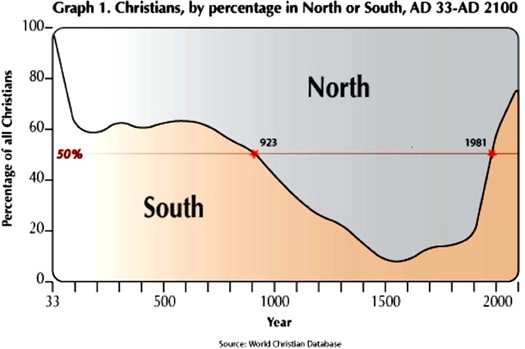
Sunday message: Not by bread alone

Lent 1 – March 1, 2020

Scriptures:
Genesis 2:15-17; 3:1-7
Romans 5:12-19
Matthew 4:1-11

We often talk of a quick trip to go and buy bread and milk. There are so many shapes and sizes and sorts of bread in the world. The smell of freshly baked bread can also be very inviting. Earning dough, or earning your bread could be a saying for making a living. Bread is truly one of the most basic necessities in life. One often hears the saying, “The best thing since sliced bread.” I read up on theatlantic.com that this common phrase, “the best thing since sliced bread,” has a clear origin. I quote, “The common phrase ‘the best thing since sliced bread’ as a way of hyping a new product or invention may have come into use based on an advertising slogan for Wonder Bread, the first commercial manufacturer of pre-wrapped, pre-sliced bread. With such products rapidly penetrating the American home, automated bread-making was not only an invention benchmark but also a key indicator of the mechanization of daily life from the 1930s onward.” [i]

One thing is certain, bread never seems to go out of fashion. We know there is a significant number of people who suffer from gluten-intolerance, which in its extreme form is known as celiac disease. For these folk, gluten-free bread has also become available – marvellous!

The love for bread even goes a step further when bread dough gets used to make pizzas and when we often love turning to pizza if we don’t have time to cook.

Now, when according to Matthew 4:4 Jesus quotes Deuteronomy 8 in response to the devil tempting Him by saying, “…command these stones to become loaves of bread”, there is rich meaning to this temptation. We know that Jesus had been fasting for forty days in the desert and afterwards He was famished.

This indicates how radical the relief would be for Jesus to turn stones into bread.

This is when Jesus continues referring to Deuteronomy 8 by saying, “One does not live by bread alone, but by every word that comes from the mouth of God.”

Yes, bread can be our sustenance, but it is very temporary. Jesus can be nourished right away, by changing some of the rocks around Him into bread. Will it hurt anyone if Jesus does that, changing a rock into a pumpernickel or a flat stone into a tortilla? If Jesus is God’s child, why shouldn’t He have what He wants? [ii]

The Tempter tells Jesus that He can have it the easy way. More often than not, we as humans all succumb to the easy way. We take the road of least resistance. It is part of who we are, to flow downstream, rather than swim upstream. How often don’t we pass on what’s eternally best for what will satisfy us for the moment? Jesus gets what the temptation is to take the easy way; “One cannot live by bread alone. Obedience to God is more important than my own comfort.”

There is more to life than just filling our tummies. There is our soul, the spiritual dimension of who we are. The hunger of our inner eternal being needs to be satisfied too. This seems to be part of Jesus’ need after spending forty days in the desert, fasting.

I find it rather startling to observe that for many of us “every word that comes from the mouth of God” could be neglected. When we have everything we need, and when we focus on our physical needs alone, it can easily happen that our souls remain under-nourished.

Yes, I can go for counselling, I can do yoga, spend time in nature, or be with my loved ones and that might be fulfilling. However, it does seem that there is a deeper need that I am not taking care of.

How easily don’t I rather spend lots of time checking what is up on Facebook or Instagram, or even my regular email, but when it gets to spiritual food, every word that comes from the mouth of God, I put this on the back-burner?

An observation that I tend to forget, is one that occurred when I came to Canada. Here in Canada, we have so many material needs fulfilled that there seems to be a condition that could be described as affluence of the north. What I found scary, was that this is indeed so much part of Christianity in the North, but for the South, there is a deep hunger for the things spiritual.

The material needs are often not taken care of as well as the spiritual needs, but folks in those regions crave for “every word that comes from the mouth of God.”

How come we are so okay with allowing our souls to starve?

Would it perhaps be a wise thing to tend to that which is not only bread but the words that come from the mouth of God?

The same applies to the other two temptations that we won’t be pausing at today. I wish there was enough time for them all. Jesus chooses the opposite of what we would think is common logic. Isn’t this passage about Jesus experiencing every single bit of the tests we undergo?

Getting back to the stones not being changed into bread, and rather living from every word that comes from the mouth of God, there could be great ways in which God provides for us. God provides these words in written form, something for us to read.

We’ve received brains with which a person can study God’s written word. There might also be no harm in meditating about God’s written word. Wow, even though the written word of God comes in such a variety of versions for the English language, it could do us a lot of good by memorizing parts of the written word of God. If Jesus is the Son of God, more in need of the words that come from the mouth of God, would we, who are mere humans not also be in need of satisfying our need to hear what God has to say to us?

These are means by which God could speak to us and communicate the love that God has for us. It becomes possible to understand that God isn’t even nearly as demanding as the world can be. God loves us and extends forgiveness and grace that we don’t even need to earn.

Would the bottom-line of Jesus’ temptations in the desert be summed up in these following words? Jesus did it all on our behalf. He resisted the ultimate temptations. There is no way for us to resist them 100 percent of the way and we can look up to Jesus who fulfilled it all for us, once and for all.

When we celebrate communion today, this is a powerful sacrament that has bread as part of it. The bread reminds us of Jesus’ body that was broken for us. This same bread reminds us that there is so much more, not just the edible bread, but also the living relationship that is offered freely to us to be in communion with one God, Father, Son and Holy Spirit. Amen


[i] Art Molella, How the Phrase ‘The Best Thing Since Sliced Bread’ Originated, at https://www.theatlantic.com/health/archive/2012/02/how-the-phrase-the-best-thing-since-sliced-bread-originated/252674/

[ii] Brett Younger, Disabling Temptations, Feb 2, 2020, on ministrymatters.com


Copyright 2020 – Heinrich Grosskopf, Minister of Dayspring Presbyterian Church

Use back button to return to main page.